Orange
Oranges are a popular citrus fruit known for their sweet flavor and high vitamin C content. They are grown worldwide and are a significant source of nutrition.
Cultivation and Growth
- Climate: Oranges require a subtropical to tropical climate with mild winters.
- Soil: Well-drained, sandy loam soils are ideal for orange cultivation.
- Planting: Oranges are grown from grafted seedlings, requiring adequate irrigation and pruning for optimal yield.
- Growth: Proper pest and disease management is essential to ensure healthy fruit production.
Associated Diseases and Prevention
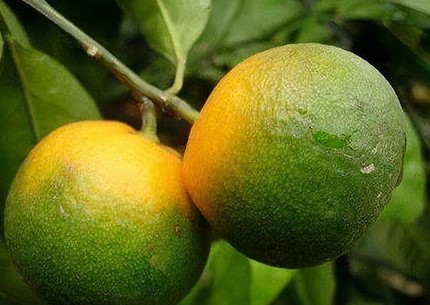
Citrus Greening
Citrus Greening, also known as Huanglongbing (HLB), is a bacterial disease that affects orange trees. It causes yellowing of the fruit and leaves, poor fruit quality, and eventual tree death.
Prevention:
- Control the Asian citrus psyllid insect using insecticides.
- Remove and destroy infected trees to prevent further spread.
- Use disease-free planting material and monitor plants regularly.
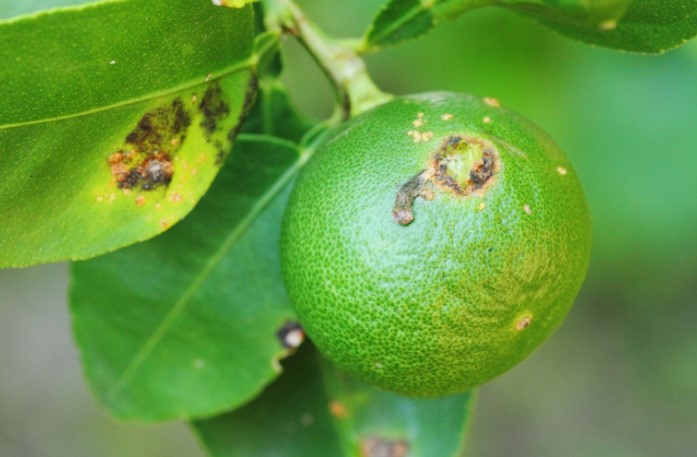
Citrus Canker
Citrus Canker is a bacterial infection that causes lesions on the leaves, stems, and fruit. It is spread through wind and rain.
Prevention:
- Use copper-based sprays to control the spread of the disease.
- Remove and destroy infected plant material.
- Ensure good air circulation by pruning to reduce moisture on leaves.
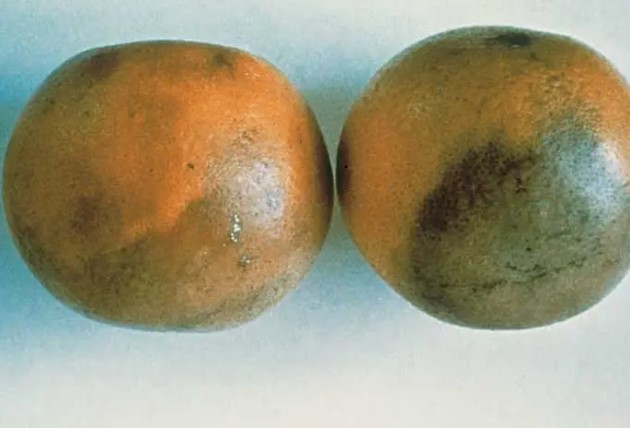
Phytophthora
Phytophthora is a fungal disease that affects the roots and crown, leading to root rot and collar rot.
Prevention:
- Improve soil drainage to avoid waterlogged conditions.
- Use fungicides to protect the roots during wet seasons.
- Avoid excessive irrigation, especially in poorly drained soils.
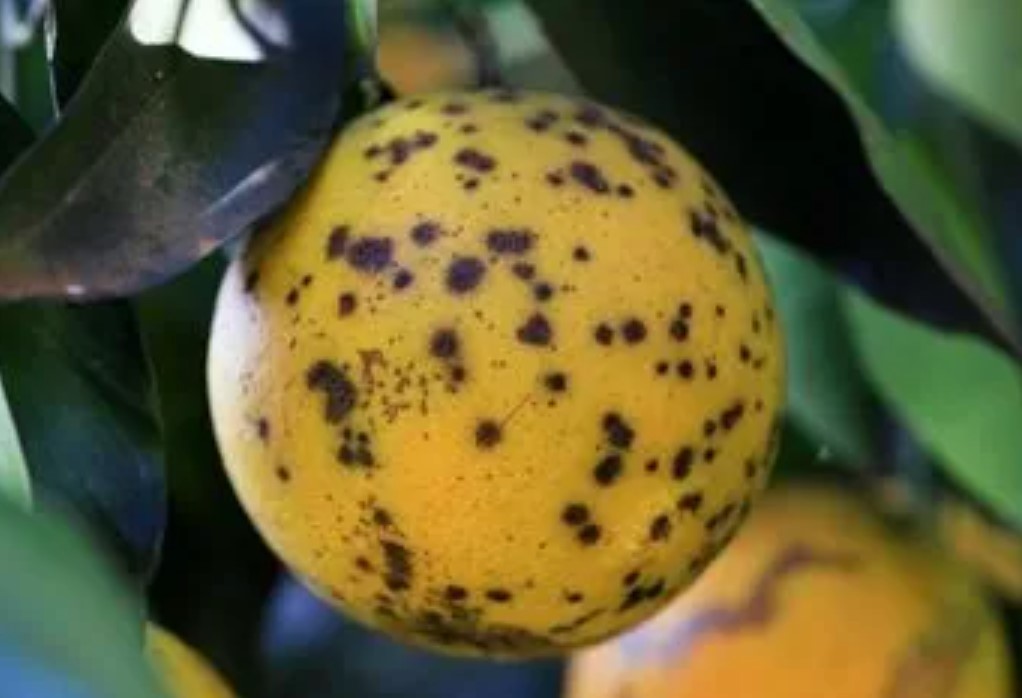
Citrus Black Spot
Citrus Black Spot is a fungal disease that causes black lesions on the orange’s skin, reducing yield.
Prevention:
- Remove and destroy infected plant debris to reduce fungal spread.
- Apply fungicides before the onset of rainy seasons.
- Use disease-free seedlings for new plantings.
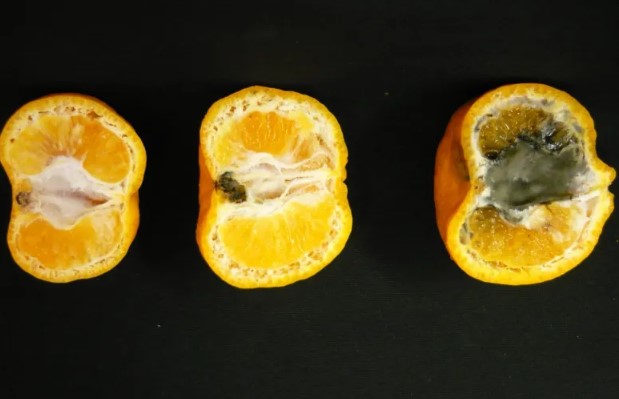
Alternaria Brown Spot
This fungal disease causes brown lesions on the leaves and fruit of orange trees, leading to fruit drop.
Prevention:
- Apply copper-based fungicides to prevent the disease from spreading.
- Prune trees to improve air circulation and reduce moisture levels.
- Use resistant varieties where available.
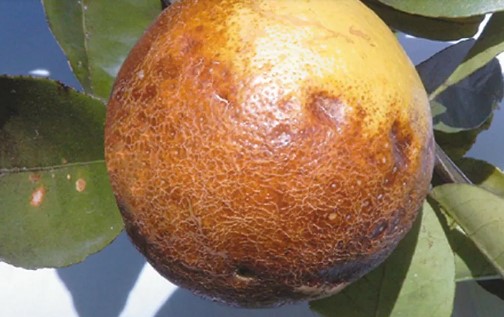
Melanose
Melanose is a fungal disease that affects older leaves, twigs, and fruit, resulting in rough lesions.
Prevention:
- Apply fungicides early in the season when conditions are humid.
- Prune affected twigs and branches to reduce fungal spread.
- Remove fallen fruit and plant debris to reduce disease pressure.